
Full-Yard Landscaping in Thornton, CO
You want the whole yard done in one project, not a bed here and a patch of sod there over three summers. Full-yard landscaping is exactly that: we grade the lot so water drains away from the house, lay out xeric and native beds that survive a Thornton August, edge everything in steel, put down sod or turf where you want lawn, and tie the beds into drip irrigation so the water goes where the roots are. One crew from grade to final walk-through, one written price, and the price you sign is the price you pay.
Best Value is family-run out of our shop on Washington Street in north Thornton, licensed and insured, with 10-plus years on Adams County clay. Full-yard work is where all of it comes together at once, and it's where a yard either drains right for a decade or fights you every spring. Free on-site estimate, usually within 48 hours of your call.
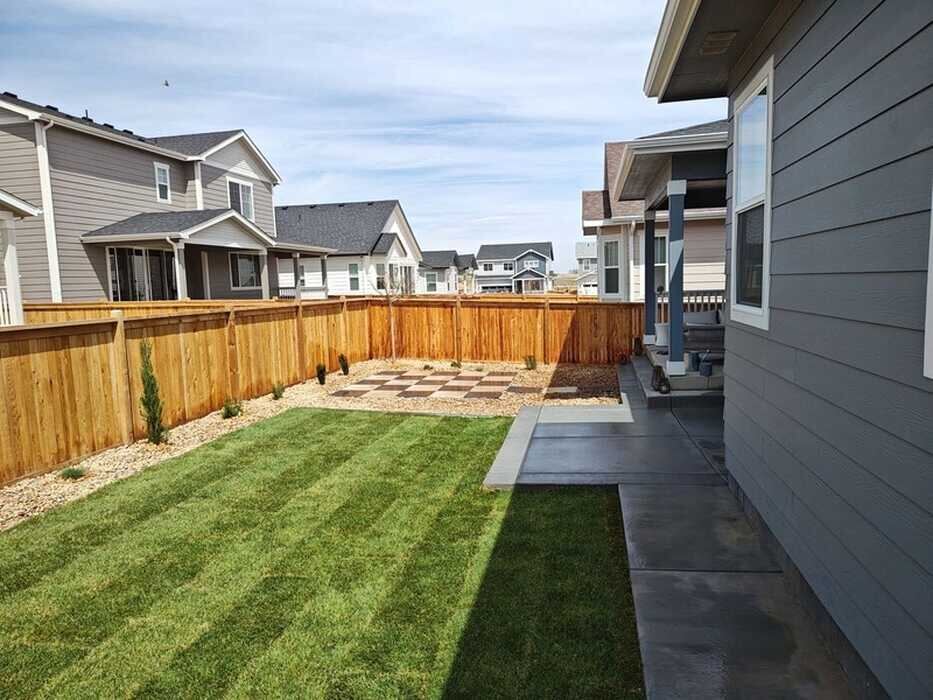
Full-yard landscaping service in Thornton, CO, start to finish
A full-yard landscaping project is a design-build sequence, and the order matters as much as the plants. On a standard quarter-acre Thornton lot the work runs in a set order over several days on site:
- Grade and drainage first. We re-grade the lot to slope a minimum of 6 inches over the first 10 feet away from the foundation, and add drain tile or a French drain on lots that pool after snowmelt. On bentonite-heavy Adams County clay this is the step that either saves your basement or doesn't.
- Bed layout and soil. We shape the beds, till compost into the top 6 inches so roots have something besides raw clay to grab, and set steel or natural-stone edging that holds its line, never the flimsy plastic strip that pops out by year two.
- Plantings. Native and adapted species grouped by water need, planted in the fall or early-spring window that actually works here.
- Lawn surface. Fresh-cut sod, seed, or artificial turf depending on grade, budget, and how you use the yard.
- Irrigation tie-in. Drip to the beds, matched-precipitation heads to the lawn, all zoned to your Thornton watering window.
The owner walks every full-yard estimate and hands you a written scope with materials by name. Call (303) 915-8649 to get on the schedule.
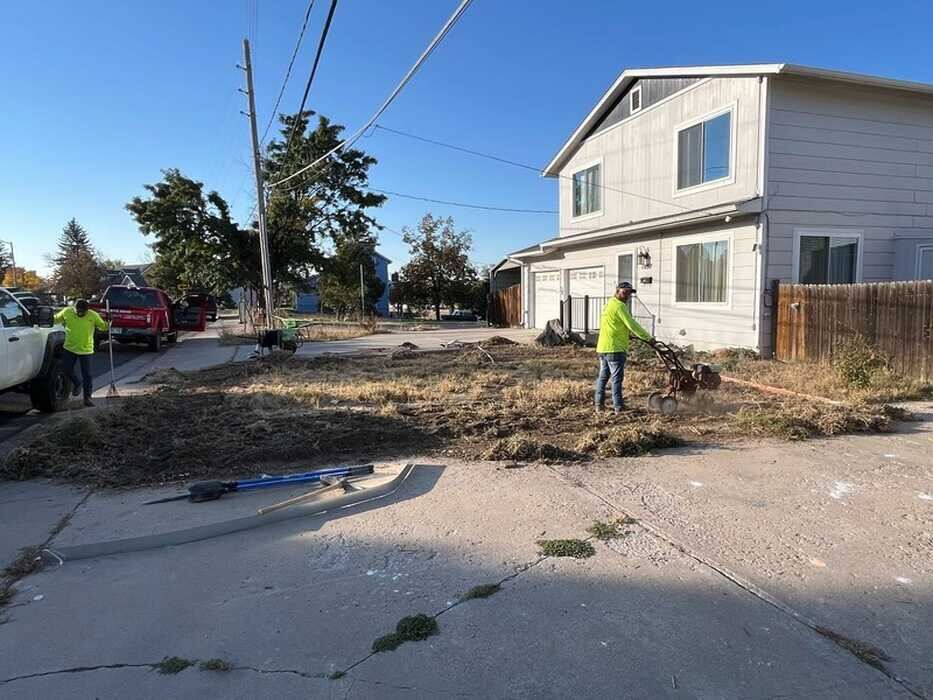
Landscape grading and drainage: the step that decides everything
Grading is the part of a full yard nobody sees and everything depends on. Thornton sits on bentonite-heavy expansive clay that swells when it's wet and shrinks when it's dry, so water that pools against a foundation doesn't just kill a lawn, it moves the house.
Where a lot naturally collects water, we work in drain tile, a French drain, or a dry creek bed that doubles as a landscape feature. After 10-plus years re-grading yards across Adams County, the pattern we see over and over is a pretty surface layer laid over a grade that runs the wrong way, and no amount of mulch or sod fixes that. We fix the grade first so the rest of the yard actually lasts. Get a free written estimate and we'll walk your grade and drainage before we quote a plant.
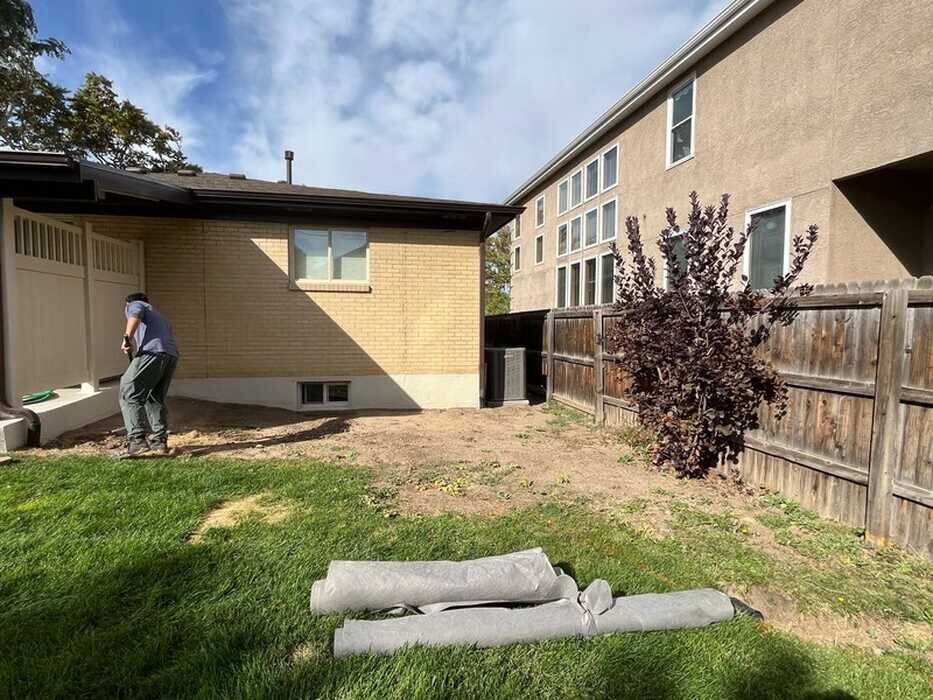
Xeric landscaping for the Front Range: a native plant palette that survives
Xeric landscaping is the whole point of doing a full yard right at 5,400 feet, and it's where most box-store plant lists fall apart. Thornton's high-desert climate swings from a -10 degree February to a bone-dry August, so we build the beds around plants that were made for it:
- Native grasses: blue grama and buffalo grass anchor the low-water zones.
- Adapted perennials: Russian sage, gaillardia, and salvia carry color through the dry months without daily watering.
- Drought-tolerant shrubs: sumac and mountain mahogany handle wind and the altitude UV that chalks softer plants out.
We group every plant by water need so the beds zone cleanly for drip. A yard built xeric costs a little more thought up front and far less water every month after.
We don't promise a specific plant survives its first year, because no honest crew on Front Range clay can. What we do is match the palette to the soil, the water, and the sun on your lot, plant in the right window, and set you up to water deeply twice a week through that first establishment season. If you want the deeper background, our xeric landscaping guide walks through why it works here.
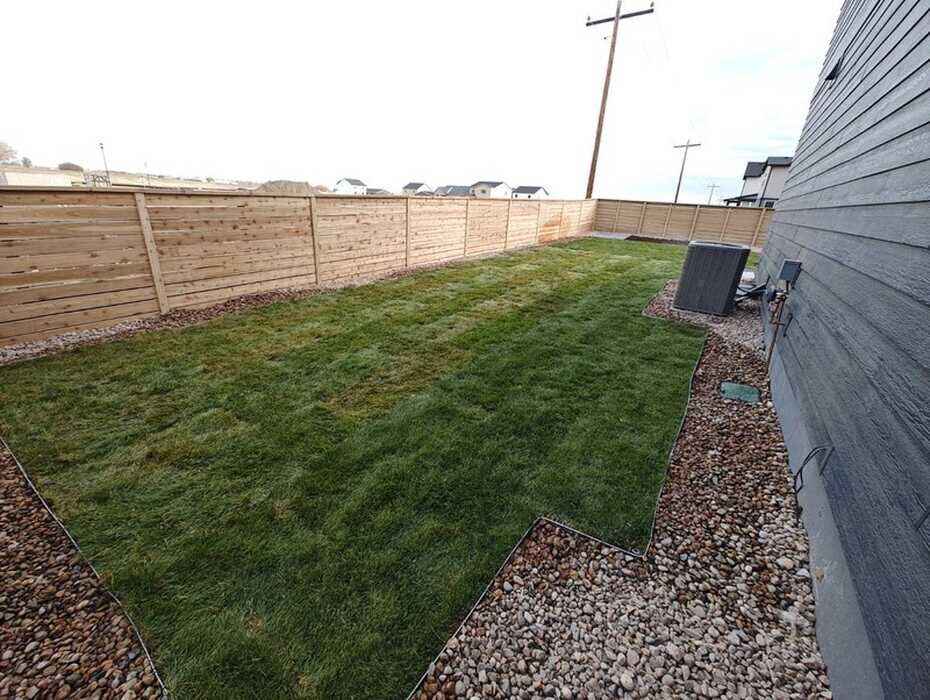
Mulch and rock beds with steel edging, plus sod vs. turf
The lawn-and-bed surface is where a full yard reads as finished or fussy. For beds, we run hardwood or cedar mulch over commercial-grade weed barrier, or 1.5-inch Colorado river rock for the low-maintenance zones, and every bed is bordered in steel edging or natural stone so the line holds instead of creeping into the lawn.
For the lawn itself, the honest trade-off comes down to how you use the space:
- Sod gives you a finished lawn the same day, holds soil on a slope through our spring downbursts, and is what we install most often. It costs the most up front. See our new sod lawns page for how we prep the base.
- Seed is the cheapest but slow and risky on bare clay, since one hot windy afternoon can dry it out and set you back.
- Artificial [turf](/services/turf) skips the water bill entirely and holds up on dog runs and hot west-facing strips where sod would just cook.
On a full-yard project we'll often mix them: sod in the main play area, xeric beds along the hot fence line, and turf on the side yard the dog already wore to dirt. Not sure which way to go? Call (303) 915-8649 and we'll match each zone to how you actually live in the yard.
Drip irrigation tie-in and Front Range planting windows
A full yard isn't finished until the water gets to the roots on a schedule that fits Thornton's watering window. We tie the new beds into drip so the water lands at the plant instead of evaporating off the top of a spray zone, and run matched-precipitation-rate heads to the lawn so no zone drowns while another runs dry. Our sprinkler and drip zones for new beds crew designs it around the odd/even watering window and sets a Hunter or Rain Bird controller with a wireless rain sensor.
Hardscape and grading can go in almost any time the ground isn't frozen, but we sequence the plantings into a survival window and call for deep watering twice a week through the first season. It's the single biggest thing that stacks the odds in your favor.
HOA rendering and plant-list approval in Adams County
This is the step most homeowners underestimate on a full-yard project, and it's the one that stalls jobs across Thornton. Newer subdivisions and most established Adams County HOAs run an architectural review that wants a scaled rendering, a plant-and-material list, and sometimes a xeric or turf-limit compliance note before you can break ground. We build that packet as part of the project so you're not guessing at their rules or eating a rejection after you've bought plants. We've put full-yard plans through the committees in Trail Winds and Hunters Glen and across the newer north Thornton neighborhoods, and we know what they ask for: mature-size callouts so nothing overgrows a setback, water-wise plant percentages, and a rendering that shows the committee what the finished yard reads like.
We'll tell you which one you actually need on the walk. Request a no-obligation estimate.
What a full-yard install includes: by name, not by allowance
Every full-yard estimate calls out materials and specs by name. No vague lines that turn into a fight at install.
How a full-yard landscaping thornton project actually runs
Owner walk & written scope
The owner walks the property, measures, and asks what isn't working. You get a written scope with material specs by name — no allowance line items.
Design & selections
Layouts, material samples, and finish options reviewed in your space. Included in the project, not billed separately.
Permits & site prep
We pull the permit when one is required, protect existing surfaces, and prep the site. Surprises documented in writing before any change order.
Build with one crew
Same crew start to finish. Daily clean-up, dust control where needed, and a foreman you can text directly.
Walk-through & punch list
Written punch list signed by you. We don't take final payment until you sign off the walkthrough.
Ready to start your project?
Get a free full-yard landscaping estimateWhat moves the cost of a full-yard landscaping project
We don't publish a flat number because the drivers move it a lot. Here's what actually changes the price, and the on-site estimate is free.
- $Lot size & scope
A single-zone back yard is one number; a full front, back, and side-yard renovation is a much larger project.
- $Grading & drainage complexity
A flat, well-draining lot moves fast. A lot that pools after snowmelt or sits on heavy clay needs drain tile and re-grading worked in.
- $Lawn surface choice
Sod costs the most up front, seed the least, and turf sits between with no water bill after. Mixing zones changes the total.
- $Plant density & material grade
A sparse xeric palette costs less than a fully planted bed layout; river rock and steel edging price differently than mulch and stone.
- $Irrigation & HOA requirements
A new drip-and-spray zone design and a committee that wants a formal rendering both add scope over a bare lot with no HOA.
Owner walks every full-yard estimate. Written, fixed price, no allowances. The quote you sign is the price you pay.
Why full-yard landscaping is one project, not five small ones
Homeowners often piece a yard together over years: sod one summer, a bed the next, edging when the plastic finally fails. The trouble on Front Range clay is that the pieces fight each other. Sod laid before the grade is fixed drowns in the low spot. Beds set before the irrigation is planned get spray heads jammed in where drip belonged. Edging installed around a lawn that later gets re-graded ends up buried or floating. Doing the whole yard in one sequenced project means the grade, the beds, the lawn, and the water are designed to work together from the start.
That's the case for full-yard design-build in Thornton instead of winging it a season at a time. One crew grades the lot for our expansive clay, matches a xeric palette to high-desert water, clears the Adams County HOA before install, sequences the plantings into a fall or early-spring window, and ties it all into drip so it survives. If you only need the planning phase first, that's our landscape design service; if the lawn is just thin and compacted, that's aeration and overseeding. Full-yard is for when you want it all done right, once.
Get a free full-yard landscaping estimateRecent full-yard landscaping thornton projects
Real homes, real scope, real craftsmanship — a snapshot of work delivered across the Denver metro.
Full-Yard Landscaping Thornton across the Denver metro
Frequently Asked Questions
What plants survive a Colorado Front Range yard?+
Natives and adapted species built for high-desert clay and altitude: native grasses like blue grama and buffalo grass for low-water zones, adapted perennials like Russian sage, gaillardia, and salvia for color through the dry months, and drought-tolerant shrubs like sumac and mountain mahogany that handle wind and UV. We group plants by water need so the beds zone cleanly for drip, plant in the fall or early-spring window, and water deeply twice a week through the first season. We won't promise a specific plant survives year one, but that palette and that timing stack the odds in your favor.
Do I need HOA approval for landscaping in Adams County?+
Usually yes if you're in an HOA. Newer Thornton subdivisions and most established Adams County HOAs run an architectural review that wants a scaled rendering, a plant-and-material list, and sometimes a xeric or turf-limit compliance note before you break ground. We build that packet as part of the full-yard project, with mature-size callouts and water-wise plant percentages, and we've put plans through committees in Trail Winds, Hunters Glen, and the newer north Thornton neighborhoods. Getting the plant list approved before install is what keeps you from tearing out plants the committee never signed off on.
How is this different from your landscaping and landscape design pages?+
Full-yard landscaping is the whole design-build install in one project: grading, beds, plantings, lawn surface, edging, and irrigation tie-in. The landscaping page is focused on lawn care, aeration, and overseeding a lawn that's thin but not gone. The landscape design page is the planning-only phase: measuring the lot, choosing the palette, and getting the plan through your HOA before anyone digs. Most full-yard projects start with a design, then move to this full-yard install once the plan is signed and the planting window is right.
How do you handle grading and drainage on Thornton clay?+
Grading comes first on every full-yard project. We re-grade the lot to fall a minimum of 6 inches over the first 10 feet away from the foundation, because Thornton's bentonite-heavy expansive clay holds snowmelt for weeks and water against the foundation moves the house, not just the lawn. Where a lot naturally pools, we add drain tile, a French drain, or a dry creek bed that doubles as a landscape feature. Everything else, beds, sod, edging, and irrigation, goes in on top of a grade that runs the right way.
Sod, seed, or turf for the lawn?+
It depends on the grade, the budget, and how you use the space. Sod gives you a finished lawn the same day and holds soil on a slope through our spring downbursts; it costs the most up front and is what we install most often. Seed is cheapest but slow and risky on bare clay. Artificial turf skips the water bill entirely and holds up on dog runs and hot west-facing strips where sod would cook. On a full-yard project we often mix them, sod in the main area, xeric beds along the hot fence line, and turf where the dog already wore the grass to dirt.
We Also Serve
Get a free full-yard landscaping estimate
One foreman, one written price, one schedule. Free on-site estimate from the owner.