Paver Patio Cost: The Five Factors That Set the Price
Paver patio cost on the Front Range isn't one number. Best Value Landscaping & Fencing prices it off five factors: base depth over your soil, total square footage, the paver grade you pick, polymeric sand joints, and site prep like tear-out and access. Two patios the same size can land far apart because of what's under them, not the brick on top. The owner walks your Thornton site in person and writes a fixed figure you can sign.
The biggest swing is base depth on bentonite-heavy Adams County clay, where a patio needs the full 6 inches of compacted Class 6 over geotextile fabric, not a 3-inch shortcut that heaves out of plumb the first Colorado winter. For the full build spec, see our paver patios and walkways service page, and if you're weighing a poured slab instead, our concrete driveways and flatwork page covers that trade-off. We're family-run out of our shop on Washington Street in north Thornton, licensed and insured, and the quote you sign is the price you pay.
Updated October 2026
How paver patio cost is priced per square foot
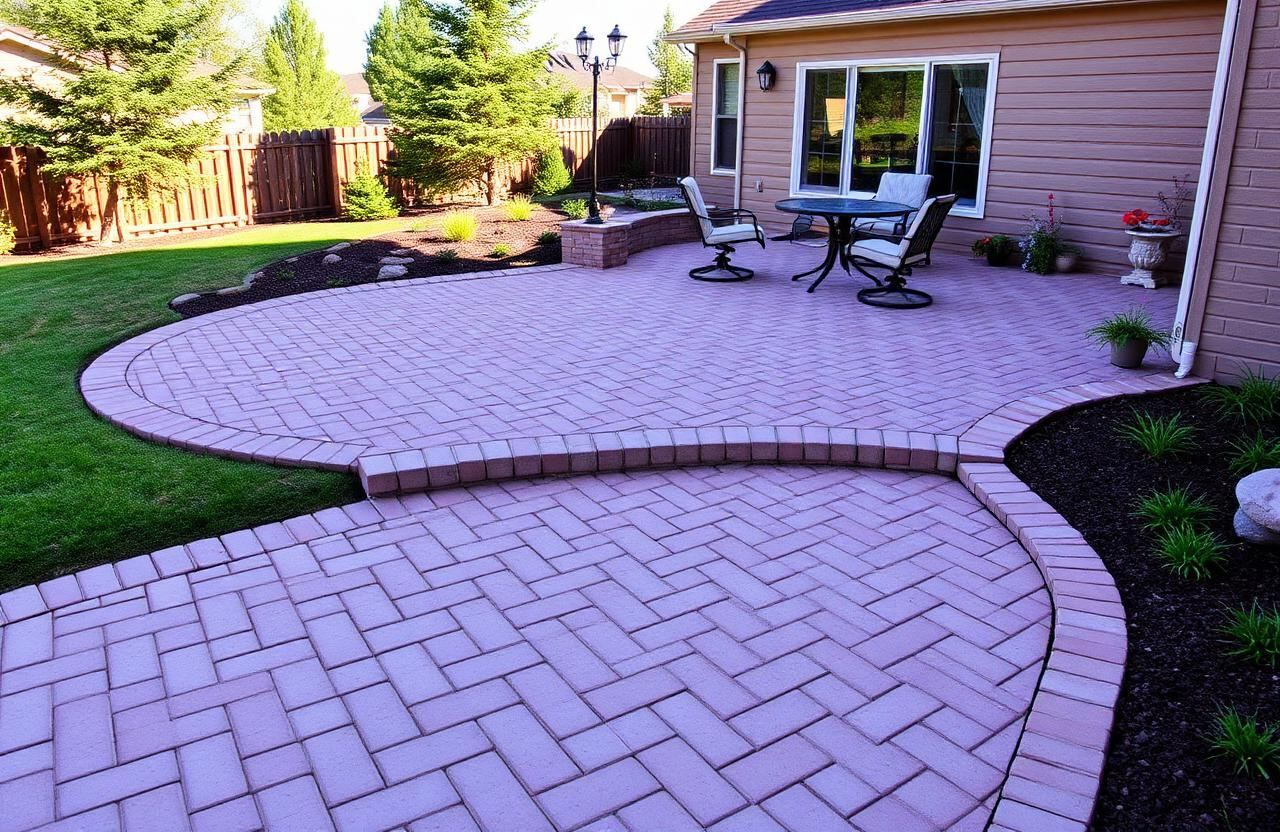
Every honest paver quote is built per square foot, and the paver grade you pick is the single biggest material swing. Across the Denver metro and the wider Front Range the grade splits into three tiers, each stepping the per-foot number up:
- Standard concrete pavers, the entry tier most patios use
- Tumbled and textured premium pavers, a meaningful step up on material cost
- Natural stone and flagstone, the top tier on both material and cutting labor
What matters more than the sticker is what the per-foot price includes. A real Front Range number already covers 6 inches of compacted Class 6 base, a screeded leveling layer, edge restraint, and polymeric sand in the joints.
The full build spec lives on our paver patios and walkways service page. If a bid skips the base depth or the polymeric sand line, that's where the savings, and the future failure, are hiding.
What makes a paver patio more expensive
Two patios the same size can quote 40% apart, and it's almost never the paver alone. Here's what actually moves the number, in roughly the order it matters on the Front Range:
- Base depth for clay soil. Bentonite-heavy Adams County clay needs the full 6 inches of compacted Class 6 over geotextile fabric, laid in 2-inch lifts. A deeper base on bad soil is real cost you should want to pay.
- Square footage. Bigger patios usually drop the per-foot price, because mobilization and base prep get spread over more surface. A small patio can cost more per foot than a large one.
- Perimeter cuts. A curved patio or a fire-pit circle adds saw labor on every edge that a straight-edge rectangle skips.
- Pattern complexity. Herringbone and basket-weave add roughly 15% to 25% in labor over a fast running bond.
- Paver grade. Standard concrete to tumbled premium to natural stone spans about 2.5x on material alone.
- Tear-out and access. Ripping out an old slab adds dump fees and skid-steer hours, and a tight backyard with no gate means every yard of base is wheelbarrowed in by hand.
The cheapest bid in town is almost always the one that priced a 3-inch base. On Front Range clay, that's the patio that fails first.
Want to know which of these drive your number? Call (303) 915-8649 and the owner walks the site before anything is priced.
Paver patio vs paver driveway cost
A paver driveway isn't just a bigger patio, and the cost per square foot reflects that. Driveway-rated 60mm and thicker pavers over an 8 to 10-inch base run noticeably more per square foot than a 50mm patio over 6 inches. The difference is base depth and paver thickness, and it comes down to load.
If you're pricing both, quote them separately, because the per-foot math is genuinely different. Weighing a poured slab for the driveway instead? Our concrete driveways and flatwork page covers the 8 to 10-inch base spec we pour on, and when a paver patio is the plan our paver patios and walkways page has the full build.
What your paver patio price actually buys
A real Front Range paver patio price includes all of this. If a quote is missing a line, that is where the savings (and the future failure) are hiding.
How a paver patio cost project actually runs
Owner walk & written scope
The owner walks the property, measures, and asks what isn't working. You get a written scope with material specs by name — no allowance line items.
Design & selections
Layouts, material samples, and finish options reviewed in your space. Included in the project, not billed separately.
Permits & site prep
We pull the permit when one is required, protect existing surfaces, and prep the site. Surprises documented in writing before any change order.
Build with one crew
Same crew start to finish. Daily clean-up, dust control where needed, and a foreman you can text directly.
Walk-through & punch list
Written punch list signed by you. We don't take final payment until you sign off the walkthrough.
Ready to start your project?
Get a free paver patio estimateThe five factors that set your paver patio price
Square footage gets you in the ballpark. These are what move the final number, in roughly the order they matter on the Front Range.
- $Base depth & soil
Bentonite clay across Adams County needs the full 6" of compacted base over fabric. A deeper base on bad soil is the line item that keeps the patio flat for 20 years.
- $Paver tier
Standard concrete pavers vs tumbled / textured premium vs natural flagstone spans roughly 2.5x on material alone.
- $Pattern & cuts
Running bond is fastest. Herringbone, basket-weave, circle kits, and curved edges with lots of saw cuts add labor on every joint.
- $Tear-out & access
Removing old concrete or pavers adds dump fees and skid-steer time. No-gate backyards mean hand-hauling every yard of base.
- $Size
Bigger patios usually drop the per-foot price because mobilization and base prep are spread over more square footage.
These are the factors that set a paver patio installation number across the Denver metro and Front Range: base depth on your soil, tear-out, access, pattern, and the paver grade you choose. Square footage gets you in the ballpark, but we don't quote a paver patio sight unseen. Exact pricing comes only after the owner walks the site, and the quote you sign is the price you pay, with every line called out by name. Call [(303) 915-8649](tel:+13039158649) for a free estimate.
Why the cheapest paver bid costs the most on Front Range clay
Thornton and most of Adams County sit on bentonite-heavy expansive clay with real shrink-swell behavior, and the Front Range frost line runs 30 to 36 inches deep. A paver field is only as stable as the base under it. The bid that comes in 30% low almost always got there by cutting the base from 6 inches of compacted Class 6 down to 3 inches of loose road base, and by skipping the geotextile fabric that keeps clay from pumping up into the base. That patio looks identical on install day and starts dipping and tilting by the second freeze-thaw season.
There is a real cost difference between a paver patio and a stamped concrete slab, and it cuts in pavers' favor over time. A cracked stamped slab is a saw-cut and patch that never quite matches. A settled paver, by contrast, is a 30-minute pull-relevel-reset on the same pavers. You pay a little more up front for pavers and you buy a surface you can actually repair. The money question is never just the install price, it is the install price plus the next ten years.
Get a free paver patio estimateRecent paver patio cost projects
Real homes, real scope, real craftsmanship — a snapshot of work delivered across the Denver metro.
Paver Patio Cost across the Denver metro
Frequently Asked Questions
What drives the cost of a paver patio?+
Five factors, in roughly the order they matter on the Front Range: base depth on your soil, total square footage, the paver grade you pick, pattern and perimeter cuts, and site prep like tear-out and access. The biggest swing is base depth, because bentonite-heavy Adams County clay needs the full 6 inches of compacted Class 6 over geotextile fabric. We don't quote a number sight unseen; the owner walks the site and writes a fixed price with every line called out by name.
Why do two paver patios the same size cost different amounts?+
Because square footage is only one factor. What's under the pavers, the base depth and soil prep, is the biggest swing, and it's invisible once the patio is done. A curved or fire-pit layout adds saw cuts on every edge, herringbone and basket-weave patterns add labor over a simple running bond, and the paver grade spans roughly 2.5x from standard concrete to natural stone. Tear-out of an old slab and a no-gate backyard add cost too. That's how two same-size patios land far apart.
How does paver grade change the price?+
The paver you pick is the single biggest material swing. Standard concrete pavers are the entry tier, tumbled and textured premium pavers step up from there, and natural stone or flagstone sit at the top on both material and cutting labor. The grade roughly spans 2.5x on material alone, but the base, edge restraint, and polymeric sand underneath cost the same regardless, so grade changes the sticker more than the structure.
Why does base depth cost so much on Front Range clay?+
Because the base is what keeps the patio flat for 20 years. Thornton and most of Adams County sit on bentonite-heavy expansive clay with real shrink-swell behavior, and the frost line runs 30 to 36 inches deep. A proper patio needs 6 inches of compacted Class 6 laid in 2-inch lifts over geotextile fabric that stops the clay from pumping up into the base. A deeper base on bad soil is real cost, and it's the line item you most want to pay.
Is polymeric sand worth the added cost?+
Yes. Polymeric sand is swept into the paver joints and mist-activated so it hardens, which locks the field together, sheds water, and resists weeds and ants far better than plain joint sand. It's a small line on the quote and a big part of why the patio stays tight. Plan on a re-sand every 5 to 7 years to keep it performing. If a bid doesn't list polymeric sand, ask what's going in the joints before you compare totals.
What is the cost of a paver patio vs concrete?+
Stamped concrete usually quotes a little cheaper up front, but it's one continuous slab that can crack on expansive clay, and a cracked slab is a saw-cut-and-patch that never matches. Pavers cost a bit more to install, and a settled paver is a 30-minute pull-relevel-reset on the same pavers. Over ten years on Front Range clay, pavers are usually the better value. See our concrete driveways and flatwork page if a slab is on the table.
Is the cheapest paver bid a good deal?+
Usually not. The low bid on Front Range clay almost always got there by pricing a 3-inch base instead of the 6 inches of compacted Class 6 over geotextile fabric that the soil and the manufacturer paver warranty require. That patio fails first. Compare quotes line by line on base depth and polymeric sand before you compare totals. Our installs carry a 1-year workmanship guarantee plus the full manufacturer paver warranty.
We Also Serve
Get a free paver patio estimate
One foreman, one written price, one schedule. Free on-site estimate from the owner.