
Concrete Flatwork
Driveways, patios, walkways, steps, and pads — poured at the right thickness over a compacted base with rebar and tooled control joints so it lasts.
We use 4,000-PSI mix on driveways and 3,500-PSI on residential walkways and patios. Every pour is finished by hand and cured properly before traffic.
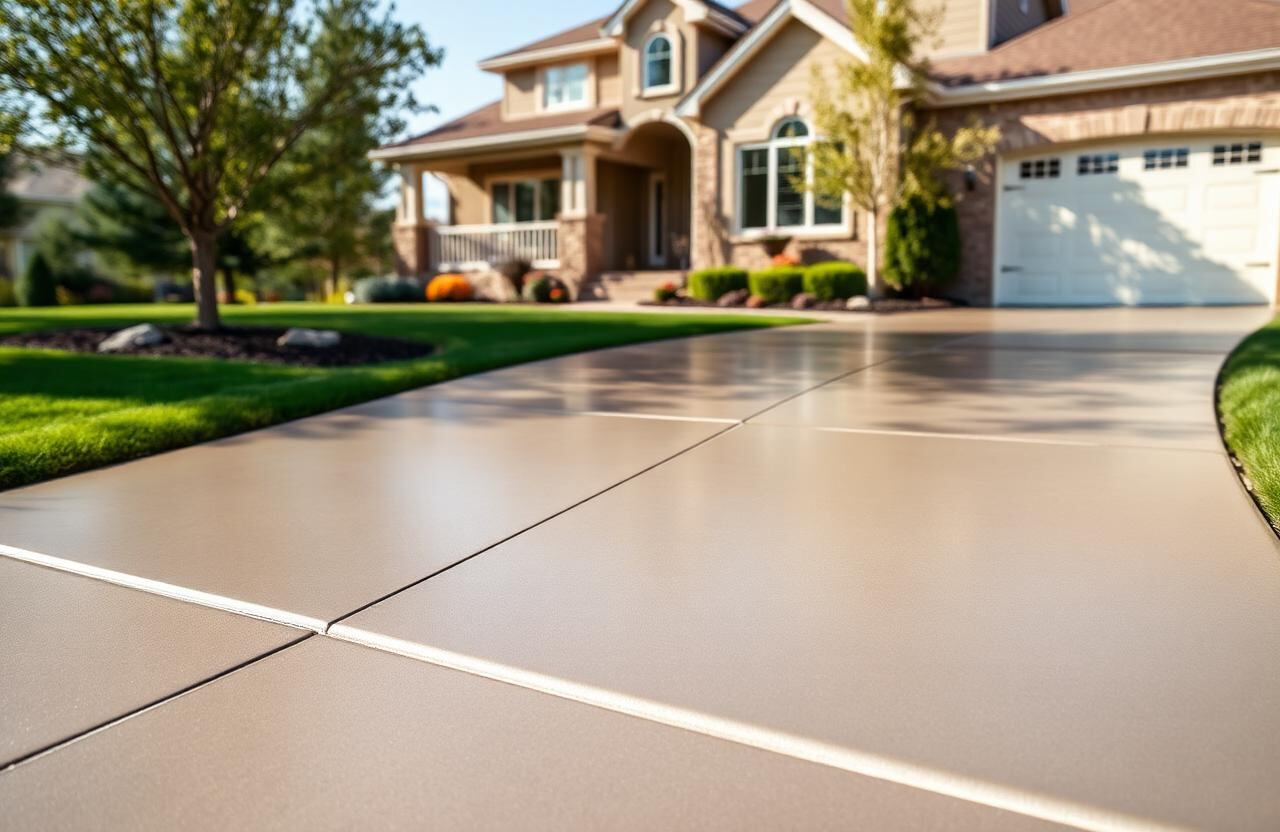
Base prep is half the job
Compacted Class 6 road base over geotextile fabric on questionable soils, graded to drain. We compact in 4-inch lifts with a plate compactor, not just spread and forget. Without a stable base, the best mix in the world cracks within two seasons. On sloped lots where the grade has to be held back before we can pour flat, our crew also builds the segmental block walls that engineer the slope on the same base discipline.
Rebar, fiber, and control joints
#4 rebar on 18" centers in every driveway, with synthetic fiber mixed into the pour for crack control. Control joints are tooled (not just saw-cut) at 8–10 foot spacing so the slab cracks where we tell it to — at the joints, hidden from view.
Finishes — broom, stamped, or colored
Standard medium-broom finish for slip resistance, salt-finish for a softer look, stamped patterns (slate, ashlar, cobble) for patios, and integral color or acid stain on top. We seal everything with a UV-stable cure-and-seal so the color holds.
Concrete spec by service
Mix design, thickness, and reinforcement called out on every estimate.
How a concrete project actually runs
Owner walk & written scope
The owner walks the property, measures, and asks what isn't working. You get a written scope with material specs by name — no allowance line items.
Design & selections
Layouts, material samples, and finish options reviewed in your space. Included in the project, not billed separately.
Permits & site prep
We pull the permit when one is required, protect existing surfaces, and prep the site. Surprises documented in writing before any change order.
Build with one crew
Same crew start to finish. Daily clean-up, dust control where needed, and a foreman you can text directly.
Walk-through & punch list
Written punch list signed by you. We don't take final payment until you sign off the walkthrough.
Ready to start your project?
Get a free concrete estimateWhat moves the price on a pour
Square footage matters, but base condition and access drive cost more than people expect.
- $Base condition
If we're tearing out old concrete or excavating poor soil, that's skid-steer hours and dump fees on top of the pour.
- $Truck access
Pump trucks on tight backyard pours add cost. Front driveways pour straight from the chute.
- $Finish
Broom is cheapest. Salt finish is mid. Stamped + color roughly doubles the per-square-foot price.
- $Thickness & rebar
RV pads and equipment driveways at 6" with heavier rebar cost more than standard car driveways.
Most residential pours are quoted within 24 hours of the site visit.
Recent concrete projects
Real homes, real scope, real craftsmanship — a snapshot of work delivered across the Denver metro.
Concrete across the Denver metro
Frequently Asked Questions
Why does new concrete crack?+
Cracking comes from skipped control joints, undersized rebar, or a poorly compacted base. We do all three the right way every time.
How long before I can drive on it?+
Foot traffic in 24 hours, light vehicle in 7 days, full strength at 28 days. We mark off every fresh pour.
Stamped vs. pavers for a patio?+
Stamped is one continuous slab — cheaper but can crack. Pavers cost more but a single bad joint is a 30-minute repair instead of a saw-cut and patch.
Do you do tear-out and replacement?+
Yes. Most of our driveway work is tear-out of cracked or settled slabs and replacement with a properly prepped pour.
We Also Serve
Get a free concrete estimate
One foreman, one written price, one schedule. Free on-site estimate from the owner.