
Wood & LVP Flooring
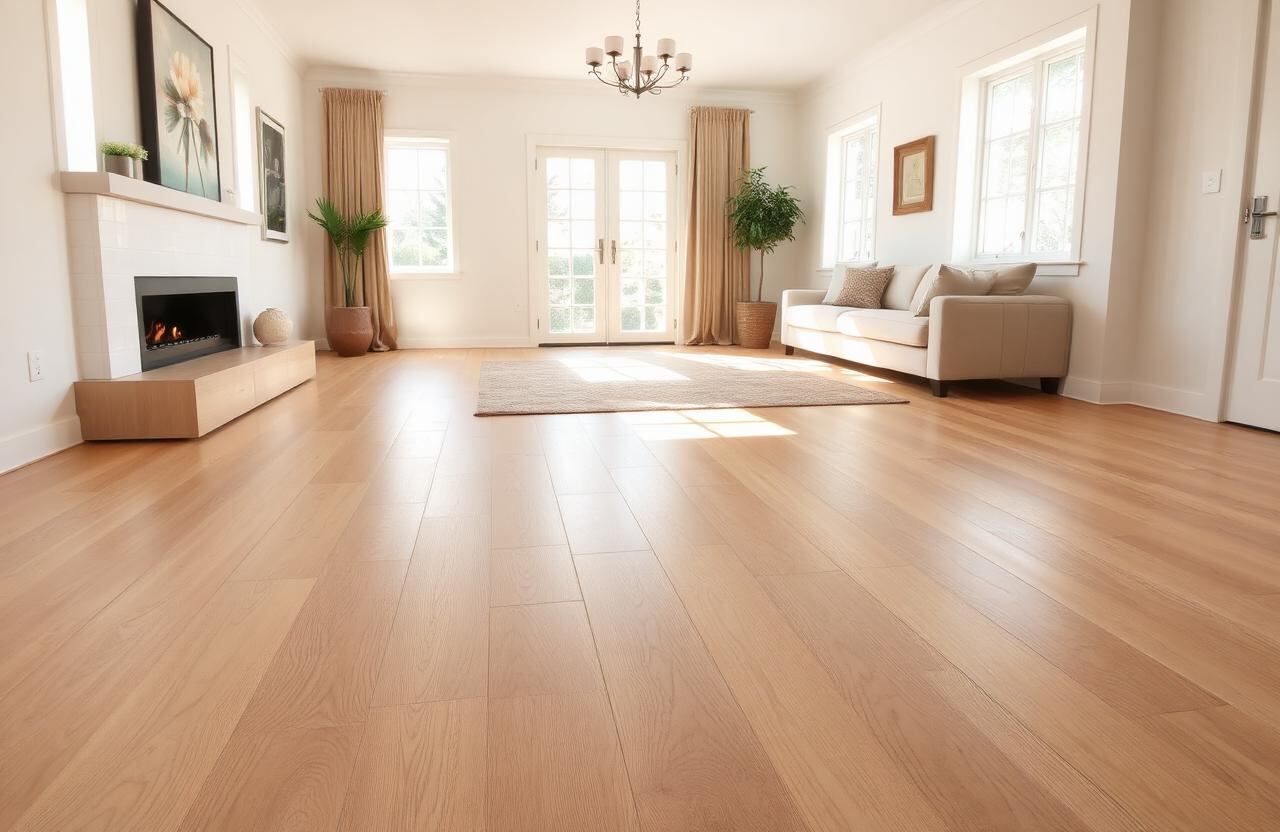
Solid hardwood, engineered hardwood, and luxury vinyl plank — laid flat over a level subfloor with clean transitions and proper acclimation before the first board goes down.
Subfloor leveling is included on every install. A floor laid over a wavy subfloor will show every dip in the right light — and squeak.
Acclimation and moisture testing
Hardwood sits in your home for 5–7 days before install — ideally in the boxes opened, stickered, in the room it's going. We test subfloor moisture with a pin meter and won't lay over wet substrate. This step prevents the cupping and gapping that shows up in winter.
Get a free flooring estimateSubfloor leveling and prep
Level to within 3/16" over 10 feet — self-leveler on concrete, plywood patching or Mapei Planiprep on wood. Squeaks fixed before the new floor goes over the old subfloor. Vapor barrier on slabs.
Get a free flooring estimateInstall — nail-down, glue, or click
Solid 3/4" hardwood is nail-down with a pneumatic flooring nailer. Engineered can be nail, glue, or floating click. LVP is click-lock or glue depending on substrate. Transitions between rooms are flush and tight, not the cheap T-mold strip.
Get a free flooring estimateFlooring spec
Material, thickness, and install method called out on every estimate.
How a wood flooring project actually runs
Owner walk & written scope
The owner walks the property, measures, and asks what isn't working. You get a written scope with material specs by name — no allowance line items.
Design & selections
Layouts, material samples, and finish options reviewed in your space. Included in the project, not billed separately.
Permits & site prep
We pull the permit when one is required, protect existing surfaces, and prep the site. Surprises documented in writing before any change order.
Build with one crew
Same crew start to finish. Daily clean-up, dust control where needed, and a foreman you can text directly.
Walk-through & punch list
Written punch list signed by you. We don't take final payment until you sign off the walkthrough.
Ready to start your project?
Get a free flooring estimateWhat moves the price on flooring
Material, install method, and subfloor condition.
- $Material
LVP is cheapest, engineered mid, solid hardwood top tier.
- $Install method
Floating click is fastest. Glue-down adds material cost. Nail-down hardwood is the most labor-intensive.
- $Subfloor condition
Self-leveler on a wavy concrete slab can add a full day. Removing old tile or carpet adds dump fees.
- $Stair treads
Wood treads to match the floor are a separate line item — meaningful cost on a multi-level install.
Most installs include moving and replacing standard furniture. Pianos and gun safes need a separate mover.
Recent wood flooring projects
Real homes, real scope, real craftsmanship — a snapshot of work delivered across the Denver metro.
Wood Flooring across the Denver metro
Frequently Asked Questions
Do you move furniture?+
Yes — we move and replace standard furniture. Pianos, gun safes, and built-ins need a separate mover.
Hardwood vs. LVP?+
Hardwood looks and feels better and refinishes; LVP is waterproof and cheaper. For basements and high-moisture areas, LVP wins. For main living, most clients still pick hardwood.
How long does install take?+
An average 1,000 sq ft floor takes 3–5 days including subfloor prep. Add a day for transitions and trim.
Can you install over existing tile?+
Sometimes — engineered floating floors can go over flat tile. Hardwood nail-down can't. We assess on the walk-through.
We Also Serve
Get a free flooring estimate
One foreman, one written price, one schedule. Free on-site estimate from the owner.