
Driveway Pavers, Patios & Walkways
Looking for driveway pavers, a paver patio, or a walkway that stays flat? We install all three on a properly compacted Class 6 base with edge restraint and polymeric joint sand. Driveways get the heaviest spec we run: 8 to 10 inches of base, geotextile fabric on our bentonite clay, and driveway-rated 60mm pavers that carry vehicle load without rutting. Best Value is licensed and insured out of Thornton, and the quote you sign is the price you pay.
Belgard, Pavestone, Techo-Bloc, and natural flagstone all live in the same install playbook: dig deep, compact heavy, edge tight, sand in tight. The difference between a patio and a driveway is base depth and paver thickness, and we do not cut that corner on either one.
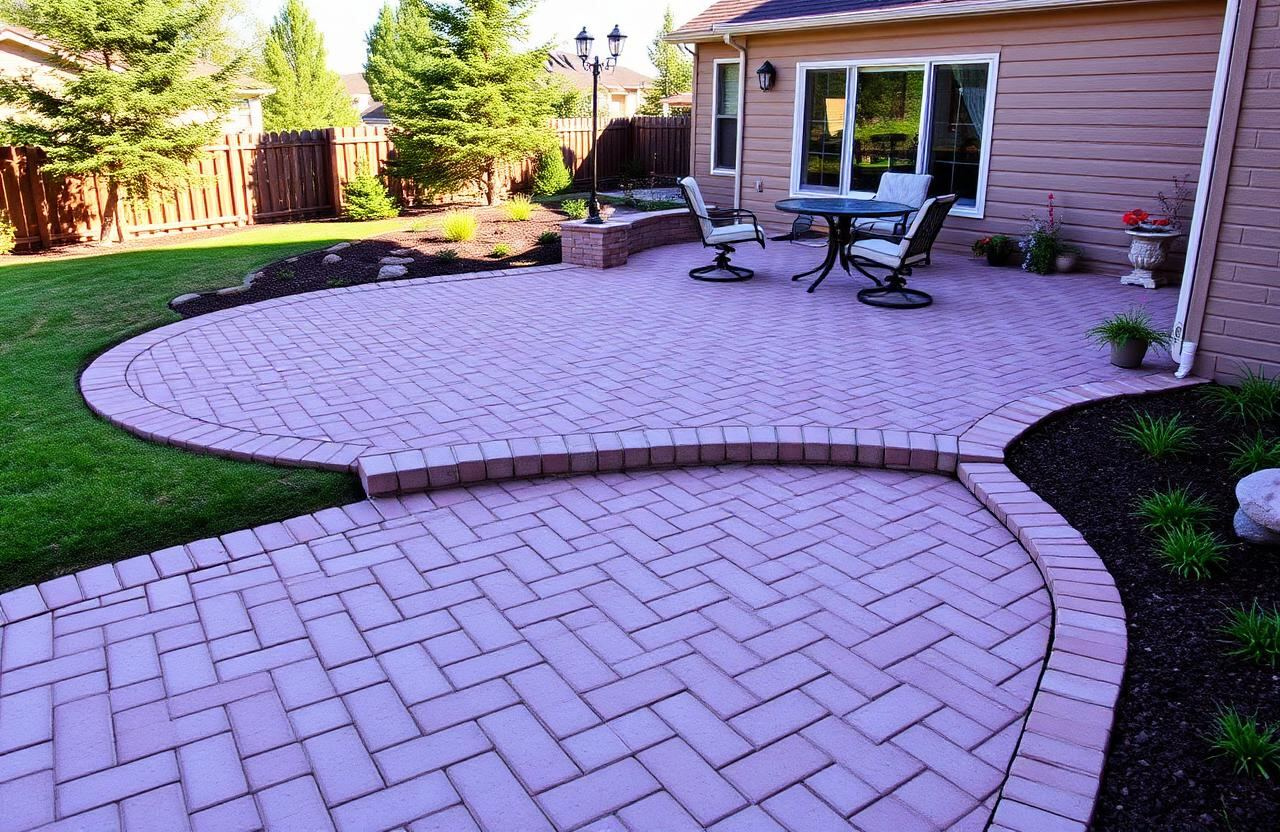
Paver driveways on Front Range clay
A paver driveway lives or dies on the base, and on our soil the base has to do more work than most guides admit. We build ours on 8 to 10 inches of compacted Class 6 road base, laid in 2-inch lifts and run over with a plate compactor after each lift so nothing settles later. That is the head-term spec that separates a driveway from a patio: a patio only needs 6 inches, but a driveway carries vehicle load, so we do not cut it.
Freeze-thaw is the real test on the Front Range, where the ground rides a 30-to-36-inch frost cycle from October through March. Joints that flex are joints that survive, so we set driveway-rated 60mm-plus pavers on a 1-inch washed-sand bed, lock the field with spike-down edge restraint, and finish with polymeric sand that hardens into a joint that moves with the slab instead of cracking across it. That is the whole reason we run pavers on driveways here instead of one big slab.
Every driveway carries a 1-year workmanship guarantee from us plus the manufacturer's paver warranty on the units themselves, so the base work and the pavers are both covered. Call (303) 915-8649 if you want to talk through base depth for your grade.
Paver patio installation, done to spec
A paver patio installation runs a 6-inch compacted Class 6 base rather than the 8 to 10 inches a driveway needs, because a patio carries foot traffic and furniture, not a truck. We still lay geotextile fabric under the base on clay, still compact in 2-inch lifts, and still lock the field with edge restraint and polymeric sand. The difference is paver thickness: patios take 50mm pavers, driveways take 60mm-plus.
Pattern is where a patio earns its look. Running bond is the fastest and reads clean on a rectangle. Herringbone and basket-weave add labor but interlock tighter, which matters on a patio that sees heavy furniture. Circle kits and mixed-size patterns turn a plain square into a focal point.
A patio that stays flat after three winters isn't about the paver you picked. It's the 6 inches of compacted base and the fabric under it that nobody sees.
Belgard, Pavestone, Techo-Bloc, and natural flagstone all install on the same base playbook. Pattern, paver tier, and perimeter cuts are what move the number, and we break down the paver patio cost factors so you can read your own quote. Ready when you are: request a free on-site quote and we'll lay out patterns and pavers on-site before you commit.
The base is the install
6" of compacted Class 6 road base on patios and walkways, 8–10" on driveways. Compacted in 2-inch lifts with a plate compactor — never dumped and screeded. Geotextile fabric under the base on clay soils to prevent migration.
Edge restraint locks the field
Spike-down PVC or aluminum edge restraint around every paver field, with 10" galvanized spikes every 12 inches. Without restraint, the perimeter pavers walk out and the whole field opens up. This is the step most DIY installs skip.
Polymeric sand and proper sealing
Polymeric joint sand swept in dry, then activated with a fine mist — never flooded. The polymer hardens in the joints to lock pavers together and block weeds. Sealer optional but recommended on driveways for color retention.
Paver patio vs. concrete on expansive clay
Both are good choices on the right lot, and we pour concrete too, so we will tell you straight. A poured concrete driveway or patio costs less up front and goes down faster. On our expansive bentonite clay it will crack somewhere over its life, and a cracked slab is a saw-cut, patch, or full replacement.
Driveway and patio pavers cost more to install, but a heaved or stained section is a lift-and-relay repair measured in hours, not a demo. Pavers also let the surface flex with freeze-thaw instead of fighting it. We break the whole comparison down on real Adams County soil in our paver vs. concrete driveway guide, including where concrete still wins.
If you would rather run a flatwork slab, or you want a paver apron on a concrete drive, our concrete crew handles both on the same base discipline (the concrete driveways page is linked below). Not sure which way to go? Call (303) 915-8649 or request a free on-site quote and we will walk your grade and drainage before you decide.
When pavers are the wrong call
Do not put us on a paver driveway if what you actually need is a fast, low-cost surface on a flat, well-drained lot with no HOA look requirement. A poured concrete slab will cost less and serve you fine there. Pavers earn their keep on sloped or clay-heavy lots, where the look matters, or where you want repairs to stay small and local instead of tearing out a whole slab. On a steep lot we often terrace the grade first with an engineered block wall to hold the slope, then lay the patio on the level pad it creates. If your existing paver drive is only 3 or 4 years old and just needs a re-sand, that is a maintenance visit, not a rebuild, and we will tell you that on-site rather than sell you a new install.
Paver install spec
Same base spec as the manufacturer warranty requires — every time.
How a pavers project actually runs
Owner walk & written scope
The owner walks the property, measures, and asks what isn't working. You get a written scope with material specs by name — no allowance line items.
Design & selections
Layouts, material samples, and finish options reviewed in your space. Included in the project, not billed separately.
Permits & site prep
We pull the permit when one is required, protect existing surfaces, and prep the site. Surprises documented in writing before any change order.
Build with one crew
Same crew start to finish. Daily clean-up, dust control where needed, and a foreman you can text directly.
Walk-through & punch list
Written punch list signed by you. We don't take final payment until you sign off the walkthrough.
Ready to start your project?
Get a free paver estimateWhat moves the price on pavers
Pavers are priced per square foot, but the variables are paver tier, pattern, and the perimeter cuts.
- $Paver tier
Standard concrete pavers vs. tumbled / textured premium vs. natural stone roughly spans 2.5x.
- $Pattern complexity
Running bond is fastest. Herringbone and basket-weave add 15–25% in labor. Circle kits and mixed-size patterns add more.
- $Cuts
Curved patios with lots of perimeter cuts cost more than straight-edge rectangles.
- $Existing surface
Tear-out of old concrete or pavers adds dump fees and skid-steer time.
Paver installs come with a 1-year workmanship guarantee plus full manufacturer paver warranty.
Recent pavers projects
Real homes, real scope, real craftsmanship — a snapshot of work delivered across the Denver metro.
Pavers across the Denver metro
Frequently Asked Questions
Pavers vs stamped concrete?+
Pavers cost a bit more up front but a single bad joint is a 30-minute repair. A cracked stamped slab is a saw-cut and patch.
Will weeds grow in the joints?+
Polymeric sand stops 95% of weeds. The few that pop up over time hit with a vinegar spray and a quick re-sand every 5–7 years.
Do pavers settle?+
Properly installed over 6" of compacted base, no. Settling means the base was rushed — which is why we compact in 2" lifts.
Can I drive on pavers?+
Yes — on driveway-rated pavers (60mm+) over a heavier base. Standard 50mm patio pavers aren't driveway-rated.
How deep does the base go on a paver driveway?+
8 to 10 inches of compacted Class 6 road base, laid in 2-inch lifts, with geotextile fabric under it on our Adams County clay. Patios and walkways only need 6 inches. The extra base is what carries vehicle load without rutting through Front Range freeze-thaw.
Are driveway pavers better than a concrete driveway on clay?+
On expansive bentonite clay, pavers flex with the soil instead of fighting it, so a heaved section is a lift-and-relay repair rather than a saw-cut patch. Concrete costs less up front and goes down faster, but it will crack somewhere over its life. We install both, so we help you weigh it against your grade and budget.
What does a paver patio installation involve?+
A paver patio installation is a 6-inch compacted Class 6 base laid in 2-inch lifts over geotextile fabric on clay, a 1-inch washed-sand bed, 50mm pavers set in your chosen pattern, spike-down edge restraint around the field, and polymeric sand swept into the joints and mist-activated. Running bond is fastest; herringbone and basket-weave interlock tighter for furniture. The base and fabric under the surface are what keep it flat through freeze-thaw.
How much does a pavers driveway cost compared to concrete?+
We don't quote a flat number without seeing the lot, because the drivers are square footage, paver tier, pattern, perimeter cuts, and whether we're tearing out an old surface. A pavers driveway runs more up front than a poured concrete slab, but a heaved or stained section is a lift-and-relay repair instead of a saw-cut patch or full replacement. Call (303) 915-8649 or request a free on-site quote and we'll walk your grade before we price it.
We Also Serve
Get a free paver estimate
One foreman, one written price, one schedule. Free on-site estimate from the owner.